
Instrument Rating
What is an Instrument Rating?
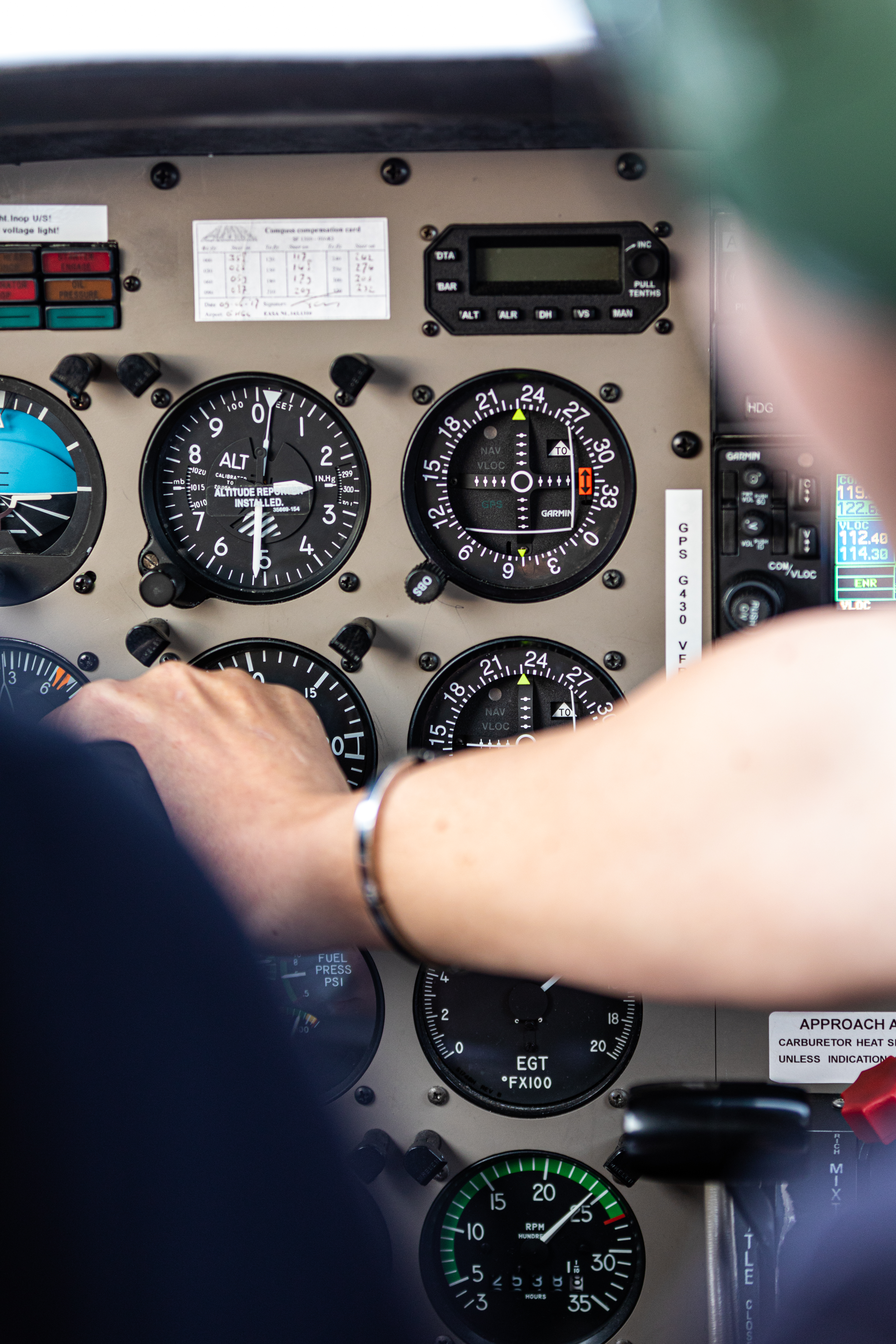
An Instrument Rating (IR) that allows you to fly the aircraft solely by reference to its flight instruments. It is one of the most challenging and rewarding ratings that you can earn, and not only allows you to fly in the clouds and other weather, but will also make you a better pilot. A well-trained and proficient instrument pilot can fly an aircraft from point A to point B without ever looking out the window!
Why should I get my instrument rating?
The first reason is safety. Even if you never intend to fly in the clouds or when the weather is not VFR, an instrument rating provides you with an extra layer of safety just in case things don’t go as planned during the flight. Not only will you have a greater understanding of weather risks and how to mitigate them, but should it become necessary to fly through the clouds, you will be trained to do so.
The second reason is simply to become a better pilot. The instrument rating will allow you to push yourself to the limits of what you are capable of, and beyond! Instrument flying is one of the most involved and satisfying ways of flying, and you will learn skills that are important even to VFR flying.
The third reason is if you want to become a flight instructor or fly as a commercial pilot. Though strictly speaking an instrument rating is not required to become a commercial pilot, not being instrument rated greatly restricts the commercial operations you can conduct.
While training for your Instrument Rating you will cover the following topics:
- Flight Planning and Filing Related to IFR
- Navigation – Departure, En Route, and Arrival Operations for IFR
- Airplane Systems Related to IFR Operations
- Instrument Flight Deck Check
- Air Traffic Control Clearances and Procedures
- Instrument Approach Procedures – Nonprevision, Precision, Missed, Circling, and Landing
- Emergency Operations Related to IFR
- Weather Information
How long does it take to earn an instrument rating?
Most people can obtain their instrument rating in about 2-4 months. However the time will vary based on how often you are available to fly, weather, and finances.
What are the eligibility requirements for an Instrument Rating?
To earn an instrument rating, a pilot must:
- Read, speak, write, and understand English
- Hold at least a current private pilot certificate, or apply for one along with the instrument rating
- Receive and log ground training from an authorized instructor or accomplish a home study course for the aeronautical knowledge required for the rating.
- Receive flight training and a logbook endorsement from an authorized instructor
- Receive an endorsement from an authorized instructor to take, and pass, the instrument rating knowledge test
- Receive and log the required flight training
In order to qualify to take the practical test, upon successful completion of which you will receive your Instrument Rating, you must meet the following aeronautical flight experience requirements:
- 50 hours of cross-country PIC time
- 40 hours of actual or simulated instrument time
- 15 hours of flight training received from an authorized instructor
- One 250 Nautical Mile cross-country training flight
Reference 14 CFR §61.65 for a complete listing of all requirements
 Flying T Aviation